

Culligan répond à vos questions !
Besoin d’informations complémentaires, d’un devis personnalisé ? Renseignez vos coordonnées et nos conseillers vous contacterons dans les plus brefs délais.
When preparing for or about to run a marathon, hydration is a key factor, just as important as training or nutrition. It allows the body to regulate its temperature, maintain cardiovascular function, and sustain prolonged effort over 42.195 km. However, proper hydration during a marathon does not mean drinking as much as possible. Above all, it involves finding the right balance between compensating for fluid losses and avoiding excess intake, which can also be harmful.
Hydration does not only support athletic performance; it also contributes to the body’s overall balance. As highlighted by Dr. Silvia Ambrogio, nutritionist and science journalist:
"Water is the most abundant and indispensable nutrient in our body, accounting for 55% to 75% of body mass depending on age. It is involved in every physiological process: regulating body temperature, aiding digestion, transporting nutrients and oxygen to cells, removing waste, and protecting vital organs such as the kidneys and brain. Even mild dehydration can negatively affect concentration, mood, and physical performance. Hydration becomes even more critical during physical activity and in warmer conditions, when fluid losses through sweating increase significantly."
During prolonged endurance exercise, the body dissipates heat through sweating. This mechanism leads to simultaneous losses of:
Studies conducted among endurance runners show that sweat rates can vary widely from one individual to another, ranging from around 0.3 to more than 2 liters of sweat per hour, depending on temperature, exercise intensity, and individual characteristics. Progressive dehydration can impair endurance, coordination, and perceived exertion, even in experienced runners. This is why planning a marathon hydration strategy in advance is essential.
Hydration for running a marathon should be addressed throughout the entire training period, not just during race week. A marathon training plan usually lasts 12 to 16 weeks. During this time, the goal is to maintain consistent daily hydration, adjusted to:
training volume,
climatic conditions,
This regularity helps avoid large fluctuations in hydration status and allows runners to test, well ahead of race day, the beverages and volumes they tolerate during exercise.
In the 3 to 4 days before the race, it is recommended to:
drink regularly throughout the day,
spread fluid intake over time,
The objective is to arrive at the starting line well hydrated, without digestive discomfort.
The day before the marathon, hydration should remain sufficient but controlled:
water intake spread evenly throughout the day,
potentially approaching 2 to 3 liters depending on the individual,
There is no universal volume that applies to everyone. The best indicators are digestive comfort, sleep quality, and urine that is clear to pale yellow.
In the minimum 24 hours preceding the race, certain intakes may impair comfort:
Water remains the reference for pre-marathon hydration.
On race morning, commonly accepted guidelines are:
These volumes help ensure proper hydration at the start without causing digestive discomfort.
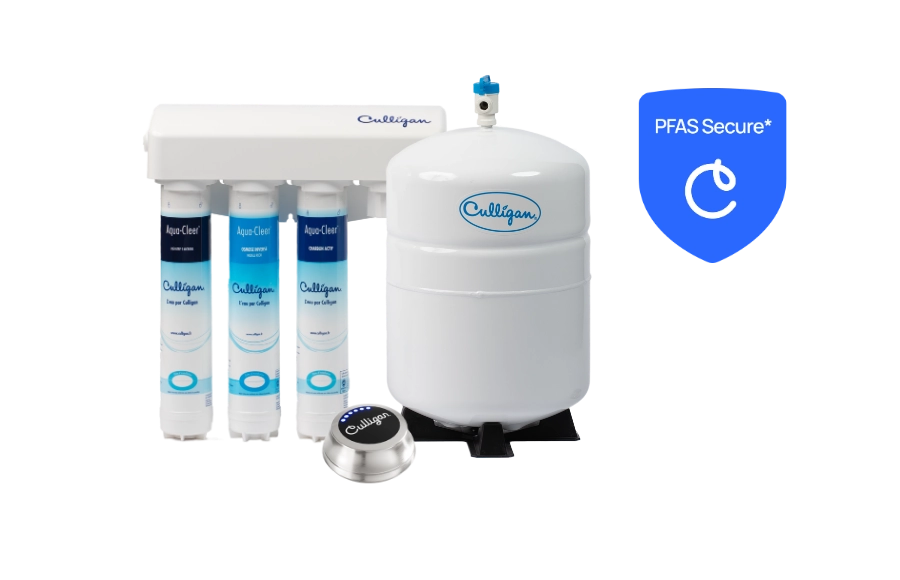
Culligan offers water filtration systems that reduce chlorine, lead, pesticides, PFAS, pharmaceutical residues, and other micropollutants in tap water. From under-sink filters to highly efficient reverse osmosis systems, our water filtration systems deliver microfiltered water that is purer and more pleasant to drink.
During a marathon, it is recommended to:
drink every 15 to 20 minutes,
The goal is to limit fluid losses without trying to fully compensate for them, which generally corresponds to about 400 to 800 ml per hour, depending on weather conditions, running pace, and individual tolerance.
It is recommended not to skip aid stations, which are usually placed every 4 to 5 km during marathons. These stations are designed to allow gradual replacement of fluid and energy losses. Skipping several consecutive aid stations can lead to cumulative dehydration, especially in hot conditions.
The sensation of thirst often appears when dehydration is already present. During a marathon, it is therefore not an early enough indicator. Planned and regular hydration helps anticipate these losses while avoiding excessive intake.
Water is essential for thermal regulation and for compensating fluid losses. It forms the basis of any marathon hydration strategy. Perceived water quality (taste, odor, etc.) can influence the ability to drink sufficient amounts daily. In this context, Culligan is committed to improving the quality of drinking water to encourage regular hydration, without claiming any direct effect on athletic performance. As a water treatment specialist, we offer microfiltration solutions directly at the tap, such as our Click & Drink Intense and Click & Drink Premium water filtration systems.
When exercise exceeds approximately 1 hour 30 minutes, drinks containing:
can complement water intake.
These drinks do not replace water but fit into a global hydration strategy, provided they have been tested during training. Excessive fluid intake without adequate sodium can increase the risk of hyponatremia.
After running a marathon, hydration remains important to support recovery:
Tap water supplied in France complies with strict health and safety standards. However, variations in taste or odor may occur depending on the water source or the condition of the distribution networks. In addition, certain substances may be present in trace amounts, particularly after water passes through older plumbing systems (such as chlorine, heavy metals, or PFAS).
Improving water quality at the point of use helps optimize taste, odor, and perceived purity, which can encourage more regular daily hydration. Water microfiltration systems can therefore make hydration more pleasant, while also helping to reduce reliance on single-use plastic bottles — a benefit for both everyday drinking comfort and the environment.
Culligan solutions align with this approach by providing microfiltered water that is more pleasant to drink, without claiming any direct effect on athletic performance, while supporting a conscious and sustainable daily hydration routine.
The information presented in this article is based on recommendations from leading scientific and institutional organizations in the field of hydration and endurance, including:
American College of Sports Medicine (ACSM) – Exercise and Fluid Replacement
Clinical Journal of Sport Medicine – Exercise-Associated Hyponatremia Consensus Statement

Article rédigé par Pauline Lacoudre Mis à jour le 22/01/2026 à 16:44
Consultez notre page de FAQ pour trouver toutes les réponses à vos questions.
Consulter notre FAQVous avez des demandes sur l’entretien, le suivi et le dépannage de votre matériel ? Culligan est là pour vous
Contactez notre service client